
Maintenance & repair

Batch detention and active control maintenance and repair.

Basins that hold runoff, let it settle, then release it through an automated valve. The basin needs normal pond care. The controls need someone who knows valves, sensors and controllers.
Batch detention · Actuated valves · Level sensors · Solar controllers · smartPOND · Real-time control

OUR MARKETS
Houston Austin San Antonio Seattle Tacoma Portland Los Angeles North Orange County South Orange County San Diego Riverside County · Santa Ana Riverside County · Santa Margarita

Short answer

What maintenance does a batch detention basin need?

Maintain the basin like any detention pond: mowing, trash, sediment and slopes. Then service the controls. Confirm the valve opens and closes fully. Check the level sensor against a staff gauge. Confirm the controller runs the approved hold-and-release program. Check the battery, solar panel and communications. Inspect the controls at least quarterly and after major storms.

Reviewed October 2026

Why it matters

  • A stuck-closed valve leaves the basin full. No storage for the next storm.
  • A stuck-open valve gives no treatment. The basin becomes a pass-through.
  • Either way, nothing looks wrong from the parking lot. You find out at inspection.

01 / Requirements

Maintenance requirements

Our recommended intervals. The approved design and the controller manufacturer’s manual govern.
Task Typical frequency Trigger or standard
Basin upkeep Monthly in growing season Same as a detention pond: mowing, trash, slopes.
Sediment Measured annually Trigger in the approved plan.
Valve function Quarterly Full open and close cycle. Seat and gate clean.
Level sensor Quarterly Reading matches a staff gauge.
Controller program Quarterly Hold time and release logic match the approved design.
Power Quarterly Battery voltage, charge controller, clean solar panel.
Alerts and data Monthly log review Storm events released per program. Alarms reach someone.
Outlet screen Every visit and after storms Debris clear of the valve inlet.

02 / Why CURRENT

Why Current

  • Our team has spent years designing, installing and servicing actively controlled ponds.
  • We service smartPOND and other controller platforms.
  • One crew covers the civil side and the control side, so nothing falls between two vendors.
  • Common in Central Texas on Edwards Aquifer sites, and used more and more to retrofit existing ponds.

03 / Our method

How Current does it

Measure first. Price second. Document against the standard.

STEP 01

Pull the design

Approved hold time, release rate, fail-safe position and the controller program.

STEP 02

Cycle the valve

Open and close in the field. Watch the actuator, seat and gate.

STEP 03

Check the sensor

Compare the reading to a staff gauge.

STEP 04

Read the log

Did the last storms hold and release as designed?

STEP 05

Basin and close out

Mow, clean, measure sediment, then report on both sides.

04 / Services

Maintenance and repair services

Maintenance

  • Basin upkeep — mowing, trash, slopes, sediment
  • Valve exercise — full cycle each visit
  • Sensor checks — against a staff gauge
  • Controller and power — battery, solar, charge controller
  • Event log review — storms held and released per program
  • Firmware and settings — coordinated with the manufacturer

Repair

  • Actuators — replaced or rebuilt
  • Valves — seats, gates and stems
  • Level sensors — replaced and calibrated
  • Controllers — replaced and reprogrammed to the approved design
  • Batteries and solar — replaced and sized to load
  • Wiring and conduit — repaired and protected
  • Outlet structures — repair and reset
  • Retrofits — convert a passive pond to active control. Installation →

05 / In the field

In the field

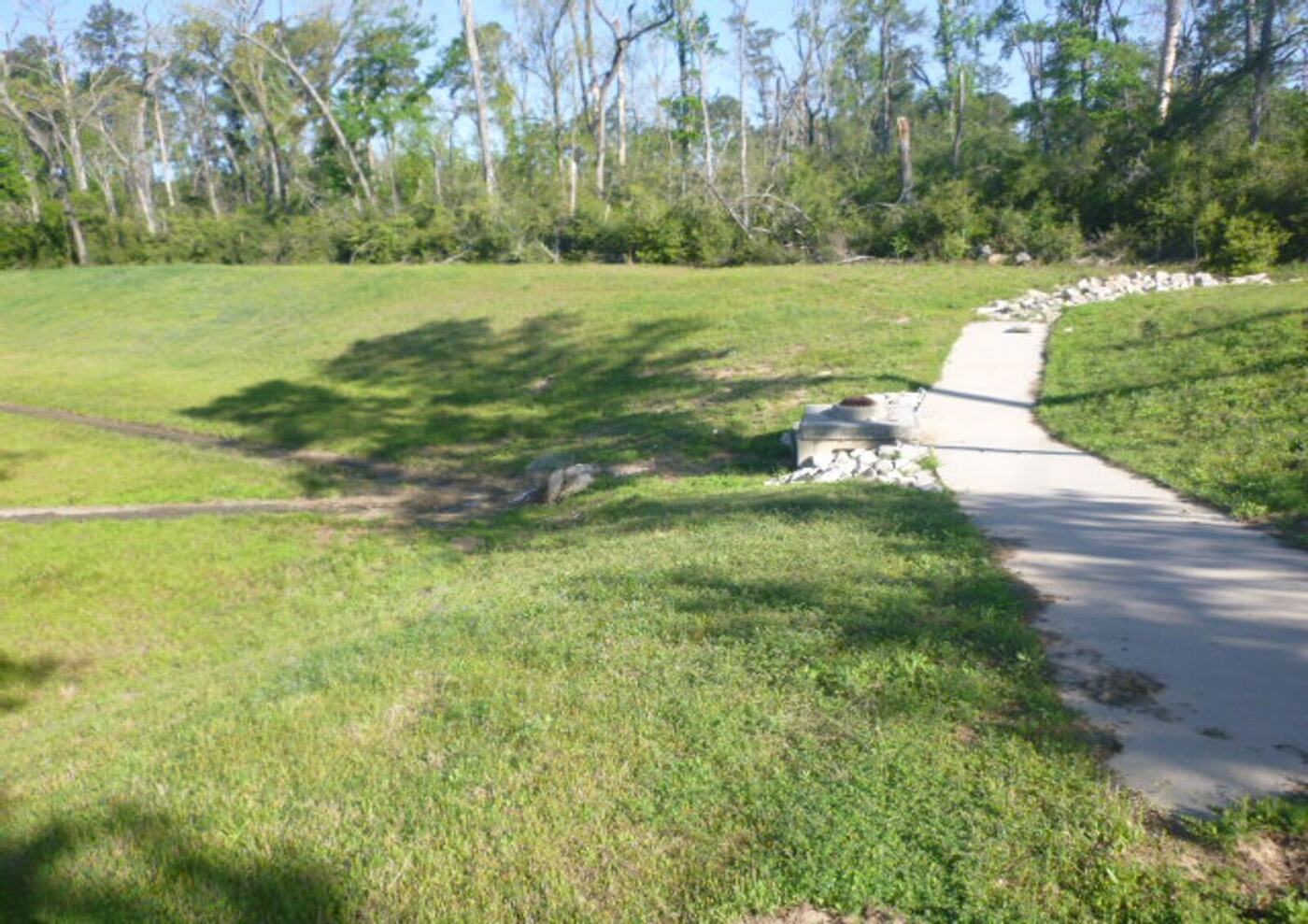
Maintained basin with clear pilot channel and access walk

06 / Reference

Reference

Controls check

Quarterly

Plus after major storms

Valve

Full cycle

Every visit

Sensor

vs. gauge

Every visit

Hold time

Per design

Verified in the controller

07 / Questions

Clear answers. Better decisions.

What to know about batch detention maintenance.

A basin that closes its outlet during a storm, holds the runoff so sediment settles, then opens an automated valve to release it. A controller and level sensor run the cycle.

A regular pond releases through a fixed orifice the whole time. A batch basin holds first, then releases. That gives better treatment, but it depends on the controls working.

It depends on the design. Many valves are set to fail to a defined position. We confirm what yours does and that it matches the approved design.

Often, yes. An actuated valve and controller can be added to many outlet structures. It needs an engineer’s review and the jurisdiction’s approval.

Get it scoped against a measurement.

Send the address. You get the measured condition, the standard it is held to, and the price to maintain or repair it.