Service
Inspections that produce a document a regulator accepts.
Annual, semi-annual, post-storm and due-diligence inspections, measured against the standard your jurisdiction adopted and formatted for the agency that reads it.

Service
Annual, semi-annual, post-storm and due-diligence inspections, measured against the standard your jurisdiction adopted and formatted for the agency that reads it.
Annual · Semi-annual · Post-storm · PE certification · Due diligence · Photo documentation
01 / The baseline
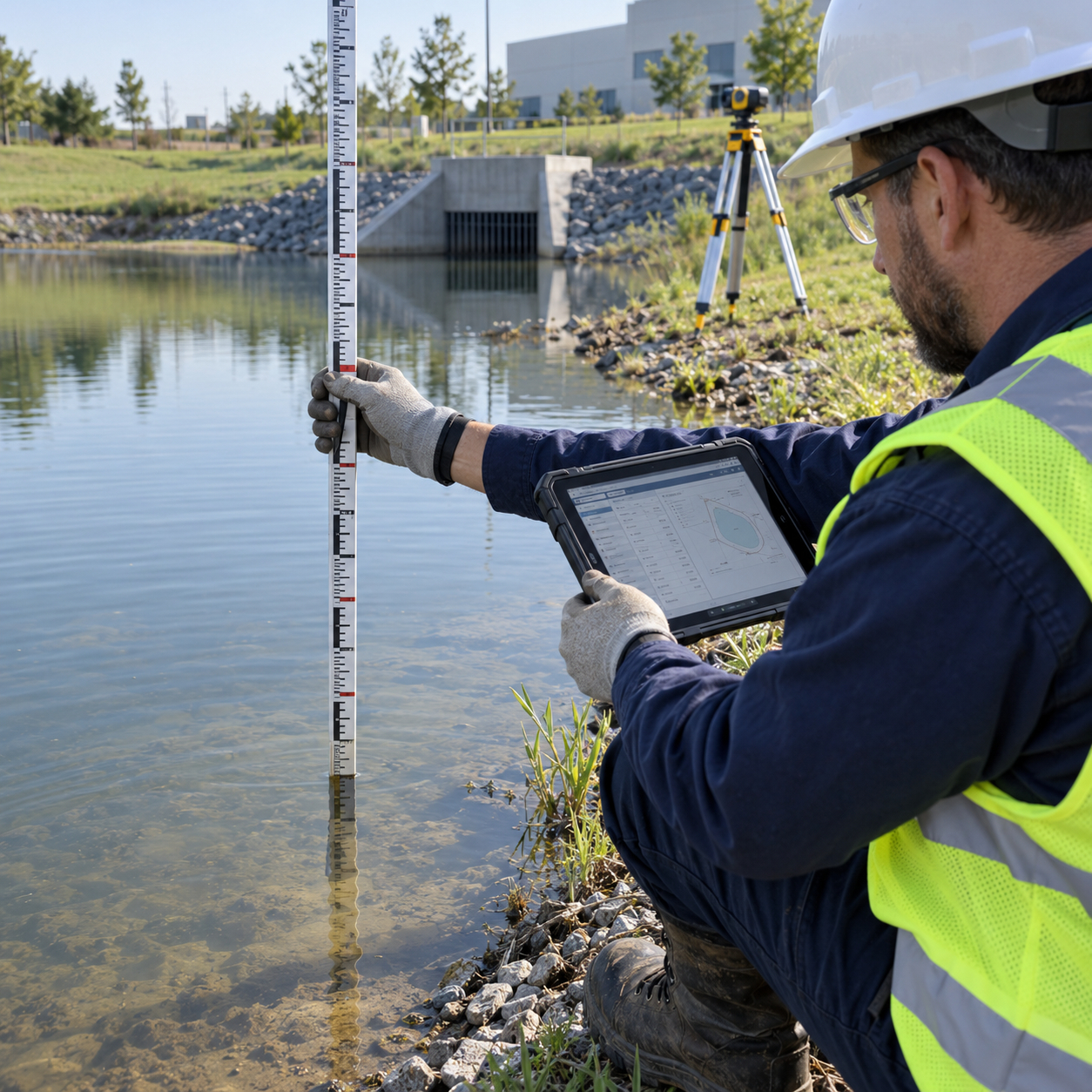
“Pond looks good” protects nobody. “Sediment 0.9 ft against 8.0 ft design depth — 11%, exceeds the 10% trigger” can be acted on, budgeted, defended and handed to a regulator.
02 / Facility inventory
03 / The deliverable
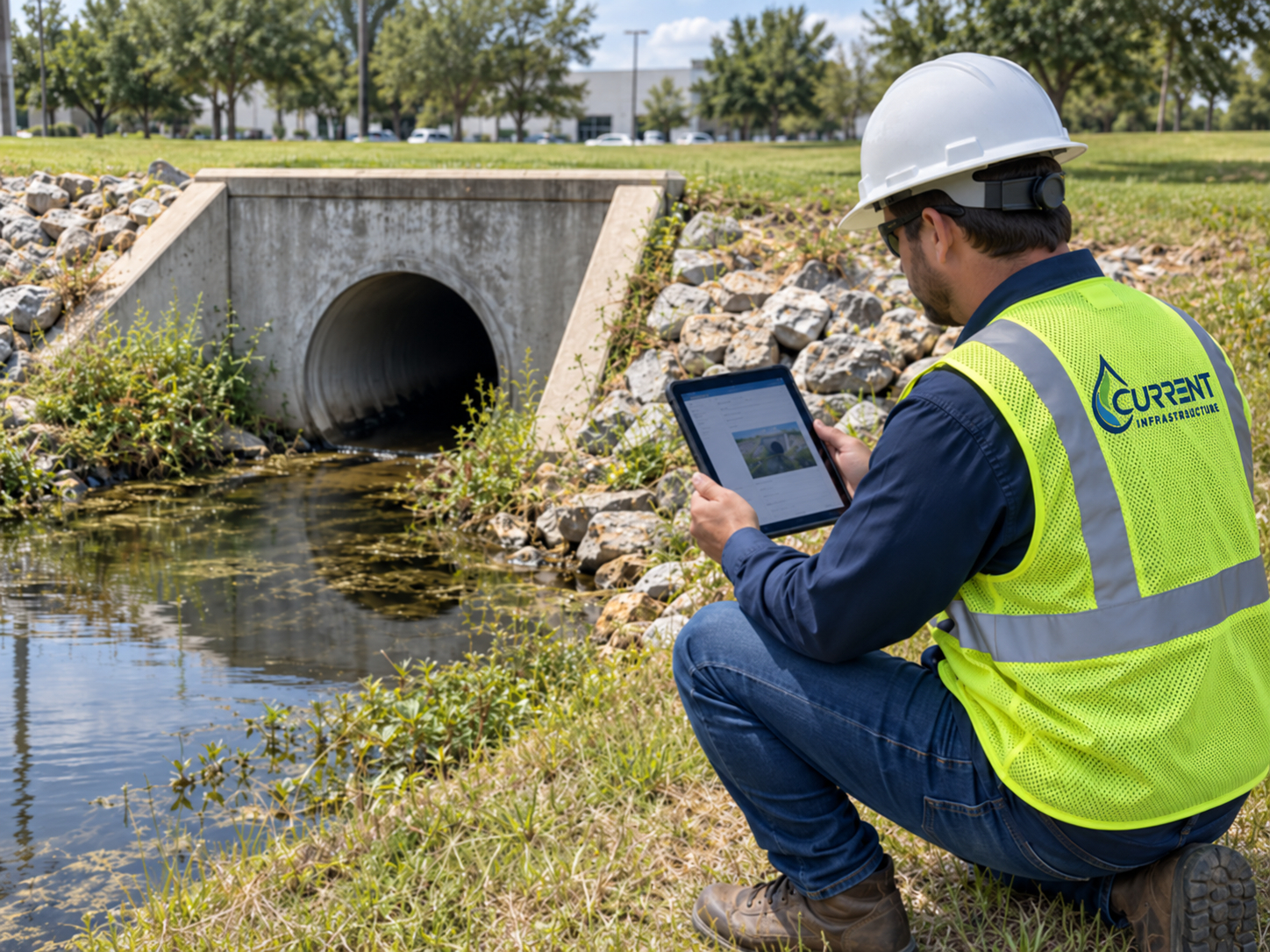
Stormwater inspection reporting.
04 / Inspection schedule
05 / In the field
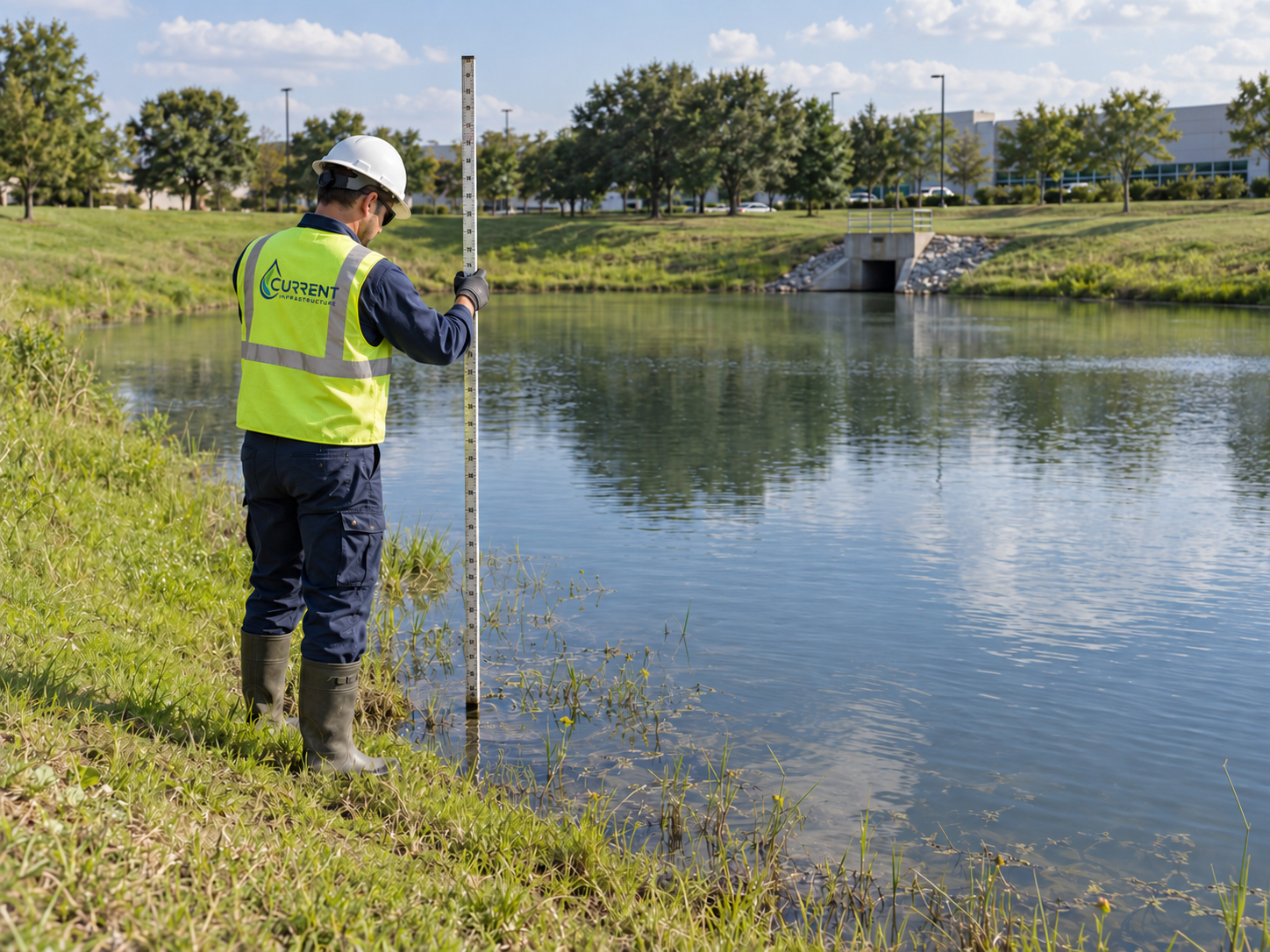
Sediment measurement in the field.
06 / Local requirements
Local standards
Thresholds and reporting differ by jurisdiction. See the market guides →
07 / Scope of work
Step 01
Permit status, drawings, recorded agreements and prior correspondence pulled before the visit, then confirmed in the field.
Step 02
Depths, drawdown times, structural and access condition, each with the method used.
Step 03
Each finding tied to the adopted standard it is measured against, with the citation.
Step 04
Photo-documented findings, ranked corrective actions with prices and timing, signed and certified where required.
Step 05
Inspection dates, reporting deadlines, permit renewals, and who owns each one.
08 / Reference
Baseline frequency
Regulatory minimum in both markets
Recommended
Semi-annual plus post-storm on loaded systems
Report turnaround
Expedited for transaction and notice deadlines
Photo method
Same vantage points each visit
09 / Questions
What to know about stormwater inspections and reporting.
It varies by jurisdiction. Some require a licensed professional engineer or qualified third party; some accept owner self-inspection on a checklist. Houston’s SWQMP form references an annual inspection by a licensed PE alongside owner self-inspections. Several Washington jurisdictions authorize requiring third-party inspection and certification.
The record starts now. A first baseline on a never-inspected site typically finds two to five correctable deficiencies, one of them material. That is a better position than being asked for maintenance records during enforcement or a sale and having none.
Most of our inspection work is on facilities built by others, often with incomplete records. Reconstructing what the facility was approved to do, from public records and field measurement, is part of the job.
A measured report showing a deficiency and a dated correction is the strongest position an owner can hold. No record at all reads as no program. Findings are written as condition against standard, with a corrective action and a date.