Service

Getting your compliance CURRENT is more than our name, it’s our job.

If you have received a notice of violation from a city, county or state, the first step is to give us a call.  We will have someone from our team onsite within 24 hours to assess the issue, reach out to the municipality on your behalf, and start the process to get you current.

Notice of violation · Failed inspection · Re-permit notice · Deadline response · Closeout documentation

OUR MARKETS
Houston Austin San Antonio Seattle Tacoma Portland Los Angeles North Orange County South Orange County San Diego Riverside County · Santa Ana Riverside County · Santa Margarita

01 / The deadline

Read the deadline first

A notice contains four things that matter: the facility or condition cited, the code section, what the agency wants done, and the date. Most owners react to the first. The fourth governs your options.

Send us the letter. Within one business day you get what it actually requires, what closing it takes, and whether the deadline is achievable or needs an extension request.

02 / Common notices

What we see most

  • Houston — SWQ permit lapse or re-permit notice. The permit renews annually. A lapse, an unreported ownership change or a missed renewal generates correspondence long before anyone looks at the pond.
  • Houston / Harris County — findings on the facility. Sediment, outlet obstruction, erosion, unauthorized modification of an approved control. Backed by civil penalties to $1,000 per day per violation and a recordable certificate of non-compliance.
  • Seattle — private facility maintenance findings. Cited against the Stormwater Code and the adopted standards, with penalties from $250 to $5,000. Surrounding jurisdictions run their own programs — Pierce County requires an annual report by May 15 from owners under recorded agreements.
  • Either market — a buyer’s engineer. Not a regulator, same problem, faster clock, price reduction attached.

03 / The closeout

How we close it

Corrective work is the easy half. What closes the file is documentation in the form the reviewer expects: the deficiency as cited, measured condition, corrective action performed, dated before-and-after photos, disposal records, and certification where the code requires it. We write the closeout to the citation, item by item, so the reviewer can check it off without a second visit.

04 / Ongoing maintenance

Then stop it recurring

A notice is a symptom of no program. After correction, the useful conversation is the calendar: inspection frequency, permit renewal dates, what the accumulation rate says about the next cleanout, and who owns each item.

05 / In the field

Condition and correction

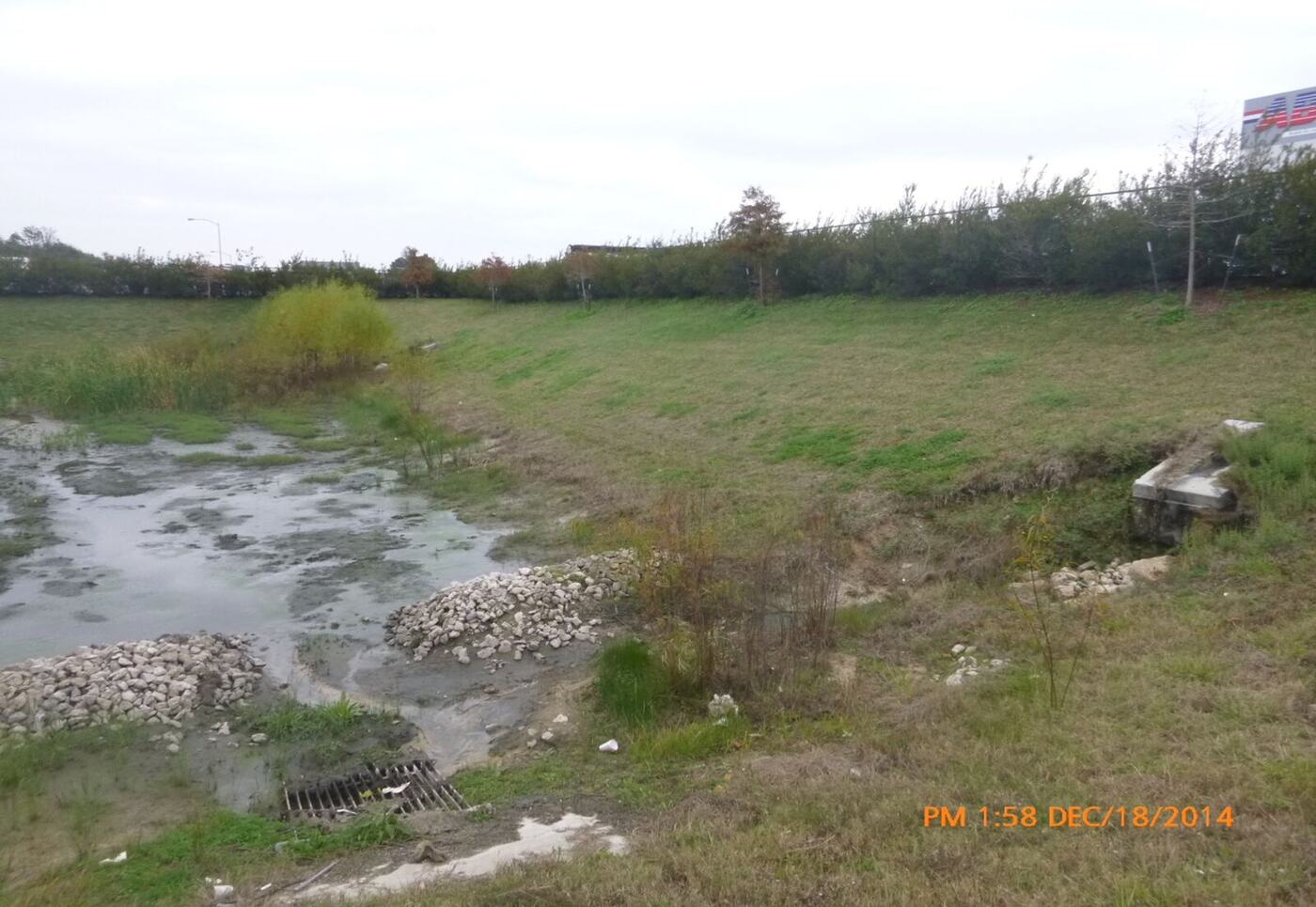
Sediment, debris and standing water around a dry basin outlet

Sediment, debris and standing water around a dry basin outlet

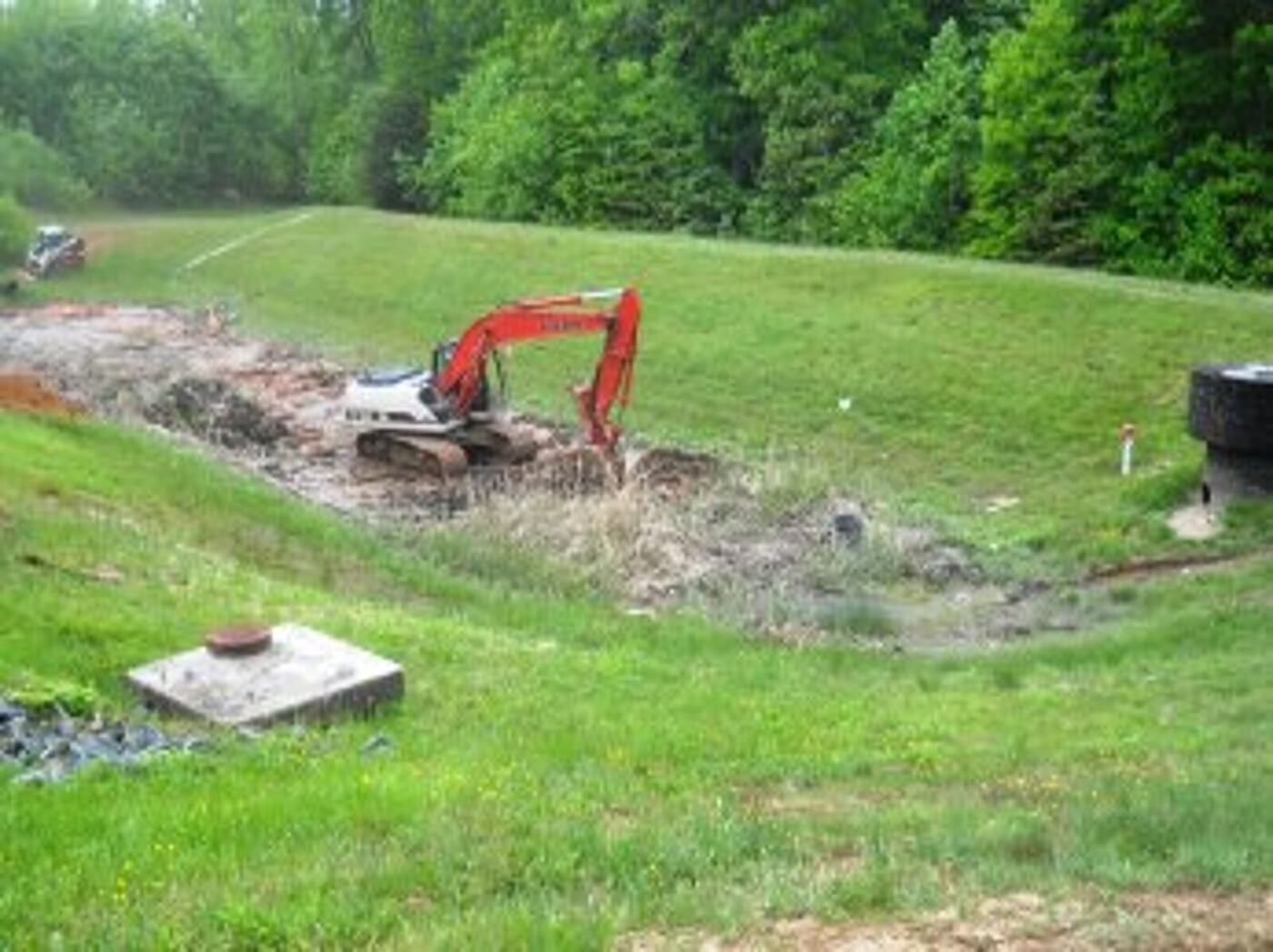
Excavator removing sediment and overgrowth from a detention basin during rehabilitation

Excavator removing sediment and overgrowth from a detention basin during rehabilitation

06 / Local requirements

Local standards

Local standards

Thresholds and reporting differ by jurisdiction. See the market guides →

07 / Scope of work

From notice to closeout

Step 01

Read the notice

Facility cited, code section, required action, deadline — and whether an extension request is warranted.

Step 02

Records and site

Permit status, drawings and recorded agreements pulled; measured field assessment of the cited condition.

Step 03

Scope and price

Corrective scope written against the citation, item by item, on a schedule that fits the deadline.

Step 04

Correct

Self-performed correction with before, during and after documentation at fixed vantage points.

Step 05

Close the file

Closeout written to the citation, submitted in the agency’s format, certified where required.

Step 06

Prevent recurrence

Inspection calendar, permit renewal dates, and a program sized to the site’s measured loading.

08 / Reference

Reference

First response

1 day

What the notice requires, from the letter alone

Site assessment

3–5 days

Measured condition and corrective scope with pricing

Houston exposure

$1,000/day

Harris County civil penalty ceiling per violation

Seattle exposure

$250–$5,000

Civil penalty range under the code’s schedule

09 / Questions

Clear answers. Better decisions.

What to know about responding to a violation notice.

Identify the deadline and the code section. Do not perform corrective work before documenting the existing condition — the before-photographs are part of what closes the file. Then get a measured assessment so the response addresses the actual deficiency. If the deadline is not achievable, an extension request with a scope and schedule lands far better than a missed date.

Agencies generally weigh cooperation, speed and documentation quality when exercising enforcement discretion, and many take an education-first posture before penalties. Nothing is guaranteed. We do not represent owners in enforcement proceedings or give legal advice, but a fast, well-documented correction is the most useful thing an owner can put in front of a reviewer.

Correspondence generated when a City Storm Water Quality permit needs renewal or bringing current. The permit renews annually and the obligation continues with the property. Administrative problem, administrative fix — but it often surfaces a physical maintenance problem alongside it. See our SWQ renewal guide.

Routinely. On enforcement matters counsel sets strategy and we supply measured condition, corrective scope and documentation. On design-related findings we work with the engineer of record — some findings are maintenance problems and some are design problems, with different remedies.

Get this scoped against a measurement.

We measure first, price second. You get the number, the standard it is measured against, and the cost to correct it.