Maintenance & repair
Stormwater lift station maintenance and repair.
Scheduled service, wet well cleaning, pump pulls, control and alarm testing. Repair when a station fails.

01 / The baseline
Quarterly service is a reasonable baseline. Monthly alarm and control checks on high-consequence sites like underground garages and hospitals. Clean the wet well as often as the drainage area requires, usually once or twice a year. Pull and inspect pumps at least annually. Test the high-water alarm end to end.
Reviewed October 2026.
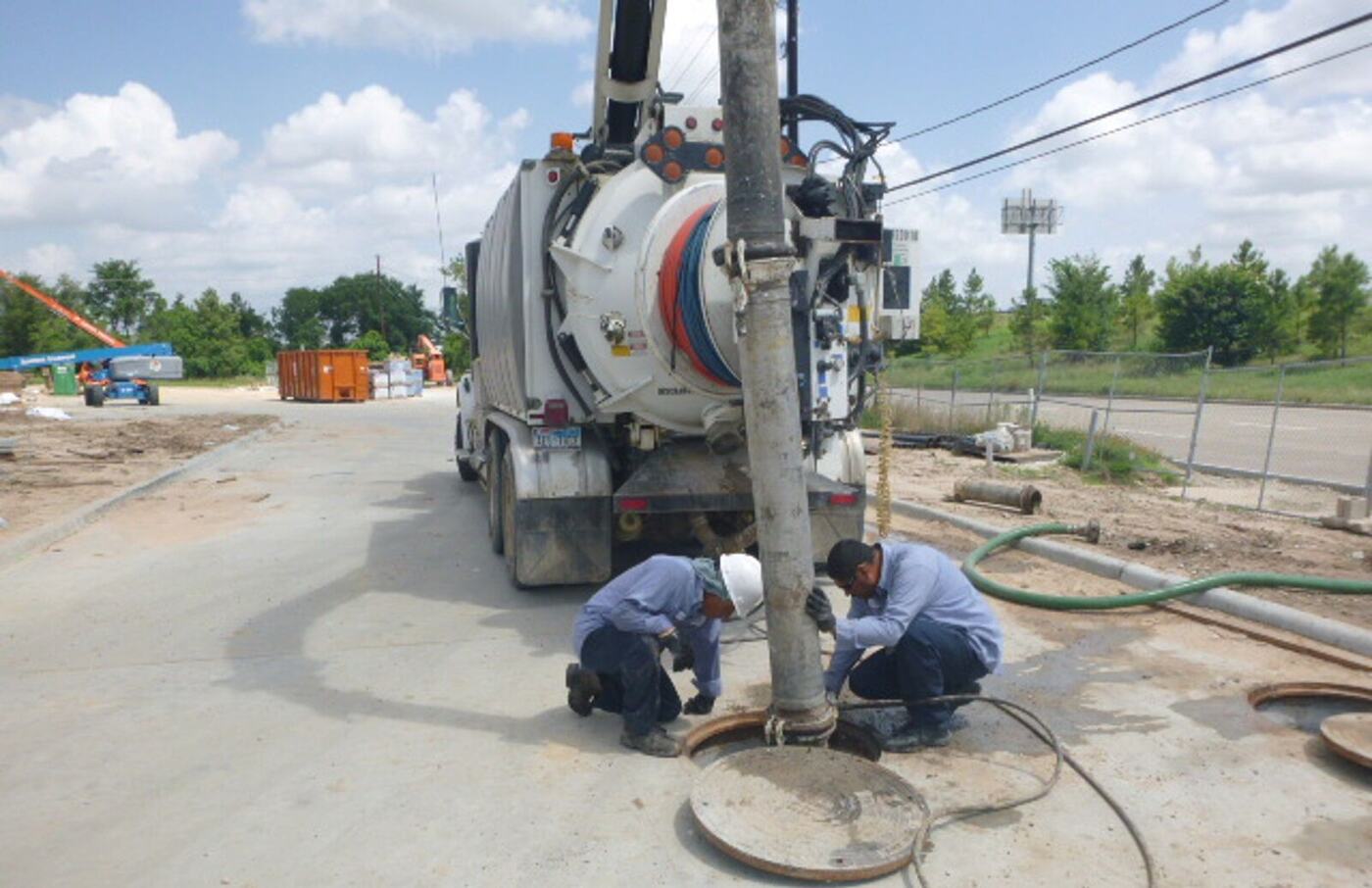
Wet well cleaning on scheduled service.
02 / Requirements
| Task | Typical frequency | Trigger or standard |
|---|---|---|
| Run check | Monthly | Pumps start and stop at setpoints. Alternation works. |
| Alarm test, end to end | Monthly to quarterly | Notification reaches a real person. |
| Full service | Quarterly | Amps against nameplate, run hours, floats, panel. |
| Wet well cleaning | 1–2×/yr, or as measured | Grit, rags and debris out. |
| Pump pull and inspection | Annually | Impeller, seals, cable, guide rails. |
| Backup power | Per manufacturer | Generator and transfer test. |
| Check and isolation valves | Annually | Exercised. No backflow. |
03 / How it works
04 / Our method
Measure first. Price second. Document against the standard.
Step 01
Drawings, pump data, setpoints and the service history.
Step 02
Start and stop levels, amps, run hours, duty and standby compared.
Step 03
Trip it and confirm who gets the call.
Step 04
Wet well cleaned under confined space procedure; pumps pulled on schedule.
Step 05
Findings, readings, and a priced repair list.
05 / Services
06 / Reference
Service
Monthly checks on high-risk sites
Redundancy
One pump means no fallback
Entry
Wet wells need a permit-required entry
Alarm
End to end, every visit
Typical service intervals. The station’s O&M manual and site risk set the actual schedule.
07 / Questions
What to know about lift station maintenance.
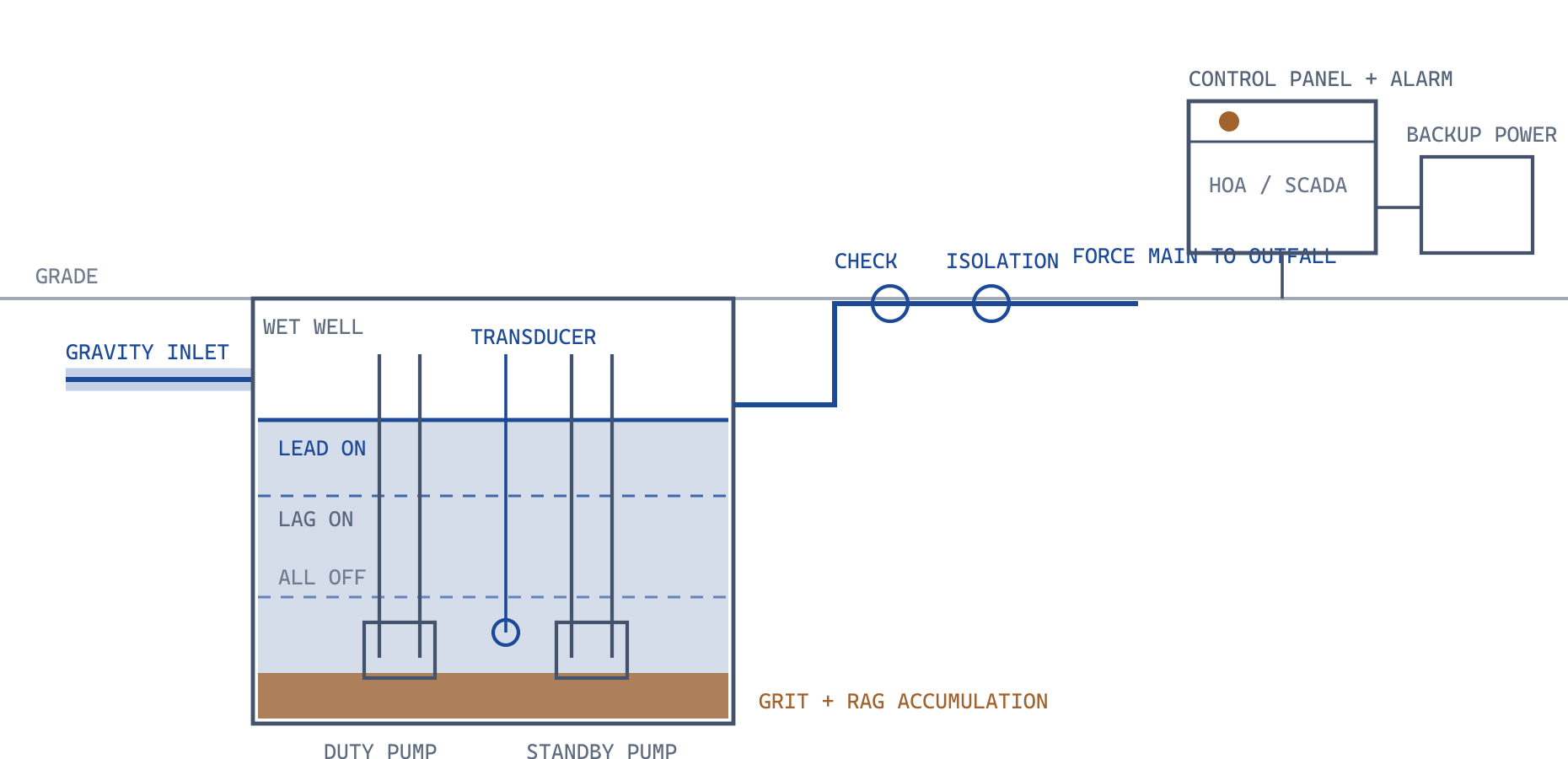
A pumped structure that moves stormwater from a low point to a gravity line or outfall where the site cannot drain by gravity. It has a wet well, pumps on guide rails, discharge piping and valves, level controls, a panel and an alarm.
Rags and debris on the impeller, fouled floats, drifted transducers, corroded panels, short cycling, power loss with no backup, and alarms nobody tested.
It can, but it should not. One failure takes the site’s drainage with it. Adding a standby pump is usually the best retrofit available.
Yes, under program agreements. Response terms are set before they are needed.
08 / Other BMPs